
Searching Lake County Civil Dockets
Lake County offers no online portal for its trial civil dockets. There is no name search and no case-number search on a county site. Your first task is to place the file correctly. It may sit in Circuit Court, Chancery Court, or General Sessions. The Circuit Court Clerk handles Circuit civil and General Sessions matters. The Clerk & Master holds Chancery and probate-side records. Give the office the full case number, caption, and filing year. Add the exact document or event you need.
Ask whether the public access computer can display the case. The Lake County FAQ confirms one such computer in Circuit Court. Counter inspection, phone questions, and mailed copy requests are the practical channels. Clerk-certified copies round out a Lake County court records search. Public Case History covers appeals only.
- Read the complaint, notice, summons, or order for the court and case number.
- Call the Circuit Clerk or Clerk & Master, based on the court.
- Ask for the current docket, public-terminal access, or inspection at the counter.
- Request a plain or certified copy and obtain the current fee quote.
- Use Public Case History only if an appellate case has been opened.
Lake Civil Dockets by Court
Civil jurisdiction in Lake County is divided among three courts. The county Circuit page is clear on this. Circuit Court handles civil cases over $25,000. Its clerk also records garnishments, executions, foreign judgments, and appeals. Chancery Court takes equity, divorce, adoption-related matters, workers' compensation, and probate-side work. General Sessions covers limited civil and small-claim-type claims. No current local dollar limit is posted. Confirm the subject and the amount with the clerk before choosing an office.
| Court | Typical Lake civil work | Custodian |
|---|---|---|
| Circuit | Civil claims over $25,000 and post-judgment process | Circuit Court Clerk |
| Chancery | Equity, divorce, adoption-related, workers' compensation, and probate-side matters | Clerk & Master |
| General Sessions | Limited civil and small-claim-type matters | Circuit Court Clerk |
| Juvenile | Custody, paternity, and support within a restricted system | Juvenile clerk |
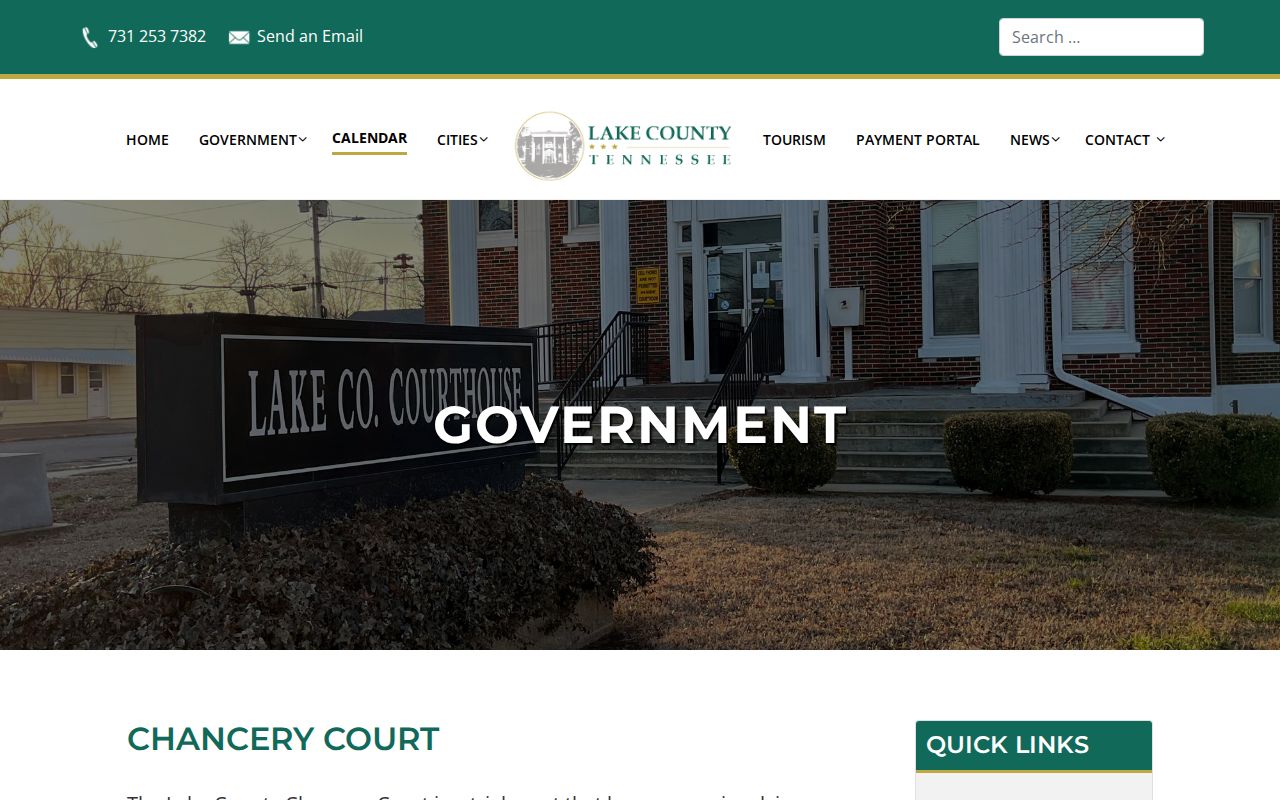
The Lake County Chancery Court page names Amber Mooring as Clerk & Master at the county courthouse.
Inside a Lake Civil Docket
A Lake County civil docket is a dated register of activity. Its header can list the case number and filing date. Court, division, judge or chancellor may appear there too. The same header may carry the caption, party roles, counsel, and status. Below that, the entries pile up. Filing, service, answer, and counterclaim may appear. So may motion, order, mediation, hearing notice, trial, judgment, costs, post-judgment writs, and appeal. Remember that each docket line is only an index entry. A motion filed is not a motion granted. The signed order remains the best source for what the court actually ruled.
| Case number | Official notices show forms such as 24-CV-76 and 23-CV-154. |
|---|---|
| Parties | Plaintiff and defendant, or petitioner and respondent, plus other claim roles. |
| Service and response | Summons, return, answer, counterclaim, or default event. |
| Motion and setting | Filed request, hearing notice, status order, continuance, and signed ruling. |
| Outcome | Settlement, nonsuit, dismissal, default, trial judgment, or appeal. |
The terminal does not show every paper. When the wording of a complaint, motion, order, or judgment matters, request that exact document from the file.
Lake Civil Docket Calls Ended
Civil docket calls no longer exist here. The 29th Judicial District local rules abolished them. So a Lake County docket will never carry a generic docket-call date explaining the schedule. Watch instead for a Motion to Set, notice of hearing, court notice, status conference, pretrial conference, scheduling order, or trial setting. Each entry serves its own purpose.
Common mistake: An old hearing date is not proof of the current setting. Check later entries for a reset, continuance, disposition, or new order, then confirm with the clerk or court secretary.
Without docket calls, order matters more. The newest operative order controls over an earlier calendar line. The broader Lake County court dates process explains how to confirm any setting.
Civil Case Types on the Docket
The mix of cases on a Lake County civil docket mirrors each court's jurisdiction. Circuit Court takes larger civil claims and may later show enforcement activity. Chancery handles equitable relief and several special subjects. General Sessions is the limited route. Juvenile civil-family matters stay on their own restricted track.
- Contract, tort, property, and other Circuit claims over the locally stated threshold.
- Equity, divorce, adoption-related, workers' compensation, and probate-side Chancery matters.
- Limited civil and small-claim-type General Sessions disputes.
- Post-judgment garnishment, execution, abstract, and foreign judgment entries.
- Appeal notices and record-transmission events after trial-court judgment.
Municipal courts keep no ordinary civil docket. Their public work is city ordinance and traffic violations.
Lake Civil Settings and Hearings
Local Rule 4.02 governs civil motion scheduling. Counsel and the court secretary control it. Counsel should confer first. The goal is a time everyone can accept. If no agreement is reached, moving counsel gets a date from the secretary. Notice then goes out. Civil trials may be set three ways. Agreement with a secretary-secured date works, as does a motion or a court notice. A Motion to Set must state the hearing time and place.
A continuance needs more than party agreement. Lake County local rules disfavor continuances. Court action is required on a written motion with an affidavit. An oral motion in court also works, absent an emergency. The docket should show a granted change, not a bare request. Mediation may also appear on a Lake County civil docket before an eligible trial or final hearing. District rules require mediation or a waiver motion. The 29th Judicial District rules are the official source for these setting mechanics.
Lake Civil Dormant-Case Notice
Watch for a dormant-case notice in Lake County. A civil case pending more than 18 months can make the district's dormant list. The trigger is no trial setting or scheduling order. Notice comes first. If no party advances the case, dismissal without prejudice can follow. That phrase means no ruling on the merits. Any later filing still depends on the applicable rules and deadlines.
A dormant notice is a warning stage, not a final dismissal. Read the later docket entries and the signed order. That shows where the case stands. A party who receives such a notice should use the court-approved setting process. Filing any paper alone will not automatically preserve the case.
Lake Civil Clerk Access Fields
Bring the clerk a clear, specific request. Give the court and the full case number. Add the caption or party name, the filing year, and the exact document or event you want. Official Lake County notices display CV-number forms. That does not prove every court and older file follows one scheme. Copy every character exactly as it appears on the original paper.
| Field | Purpose |
|---|---|
| Court | Routes the request to Circuit, Chancery, or General Sessions. |
| Case number | Provides the best file identifier. |
| Caption and year | Helps distinguish similar or archived matters. |
| Document or event | Narrows the search to complaint, motion, order, judgment, garnishment, or appeal. |
| Plain or certified | Lets the clerk quote the correct current fee. |
Need a transcript or an official electronic recording? Contact the reporter or recording custodian for that. Tennessee Supreme Court Rule 26 covers duplicate electronic recordings, and those items sit apart from the docket itself.
Lake Civil Filing Statistics
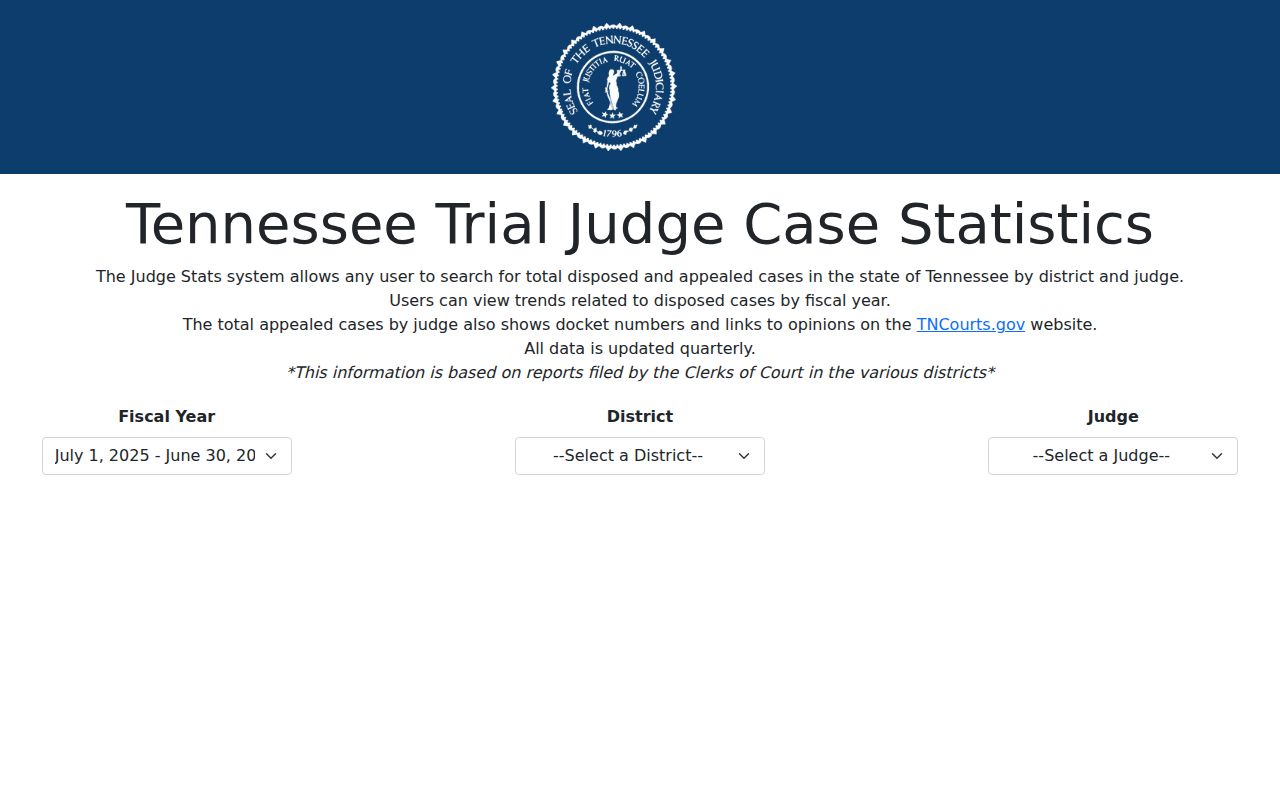
For court-system context, the Tennessee Administrative Office of the Courts publishes annual statistical reports plus a trial-judge case dashboard, both built on clerk reporting. Neither tool searches by party name or case number. The dashboard works through fiscal year, district, and judge controls, and it reports disposed and appealed case activity rather than the live contents of a Lake County civil file. The official Trial Judge Case Statistics dashboard shows the available controls.
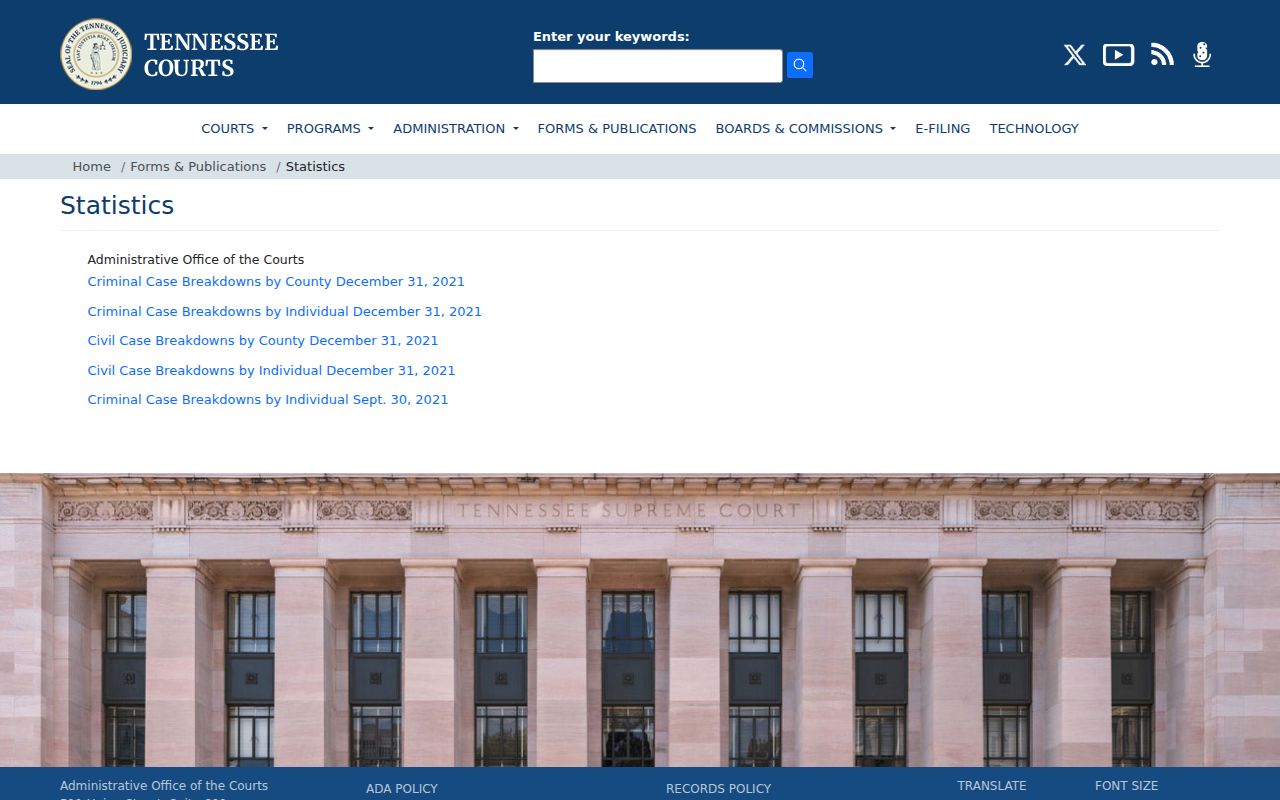
The AOC statistics index provides the source reports and county-level court data.
Lake Civil Docket Access Rules
Tennessee Supreme Court Rule 34 opens case records to inspection. A statute, rule, or court order may still make material confidential. Even so, public access has limits. Sealed filings, protective-order material, identifiers, adoption information, juvenile files, and other protected content can stay closed. Chancery and Juvenile matters often hold sensitive child or family data, so access turns on the specific file and its governing order.
The Tennessee Public Records Act likewise backs inspection and copies for Tennessee citizens, subject to other laws. Frame a request so the custodian can actually locate the record. Inspection is one thing. Getting a copy is another. Certification is a separate clerk service. Before paying anything, ask the Circuit Clerk or Clerk & Master for current page, certification, postage, search, and archive charges.
Key Rules:
Tennessee Supreme Court Rule 34 governs access to official court case records and their exceptions.
Tennessee Public Records Act guidance explains citizen requests, inspection, copies, and the need for a specific description.
Tennessee Supreme Court Rule 26 covers copies of official electronic court recordings rather than ordinary docket sheets.
Lake Civil Court Contacts
Two county pages help you pick the right office before you call. The official Lake County courts directory lists the county court offices, and the Lake County Circuit Court page explains the Circuit Clerk's civil-record role. Keep in mind these are office and routing pages, not searchable civil docket databases.
Circuit and Chancery share the courthouse address. Yet each uses its own box number and custodian. That split matters for anything sent by mail. Address a mailed request to the office holding the case. Spell out the exact paper and whether certification is needed. Confirm current fees before sending payment.