
Lake County Court Calendars Explained
Lake County publishes no trial docket. The public cannot search by case number, party, judge, courtroom, or setting type. The county's official community calendar does offer month and category filters. But it lists community and administrative events, not case settings. It will not tell you when a hearing happens.
For a real court date, three things matter. They are the written notice or order in the court file, the current docket the clerk keeps, and confirmation from the court office. Each office holds a different slice of the Lake County court calendar. Circuit and General Sessions records run through the Circuit Court Clerk. The Clerk & Master handles Chancery. Juvenile and city cases have their own contacts. One caution applies. An appellate milestone in Tennessee Public Case History does not replace the next hearing on the original trial docket.
Lake County Calendar Versus Case Calendar
People often mistake the county events page for a court-setting tool. It is not built for that. The page shows no case style, docket number, judge, courtroom, hearing time, setting type, or reset history, so none of the fields you need to verify a hearing are there.
Use the case record. A county meeting or public event does not confirm a Lake County court date. Ask for the newest setting entry or filed order.
This matters after a continuance. An old paper or an earlier date cannot override a later order. The clerk can tell you what the file contains, but the judge's secretary or court coordinator controls many motion and trial settings under local rules.
Finding Your Lake County Court Date
No Lake County online trial-calendar lookup exists for the public. Work the available channels in order instead.
- Read the citation, summons, arraignment paper, order, or notice. Copy the court, full case number, date, time, and room exactly.
- Ask for the current setting. Call Circuit or General Sessions at 731-253-7137, Chancery at 731-253-8926, or Juvenile at 731-253-7874.
- For Circuit or Chancery civil matters, ask whether the court secretary set the motion or trial and whether a later scheduling order controls.
- Ask whether the record can be reviewed on the one Circuit Court public computer, or visit the right clerk at 229 Church Street in Tiptonville.
- For a city citation, call the clerk named on it: Tiptonville at 731-253-9922 or Ridgely at 731-264-5811. Counsel can also confirm an operative notice.
The Tennessee courthouse finder lists contacts for Lake County offices.
Lake County Special Court Sessions
The 29th Judicial District rules give helpful schedule context. Lake County Chancery Court holds special sessions on the second Tuesday of each month. Circuit Court holds its special sessions on the fourth Tuesday. Courts convene at 9:00 a.m. That time holds unless the court directs otherwise. These recurring patterns explain the calendar's rhythm. They do not prove any specific case is set.
For the actual Lake County court date, trust a filed notice plus clerk confirmation. A special-session pattern can shift by court direction. The official AOC courthouse directory shows each court's contact details.
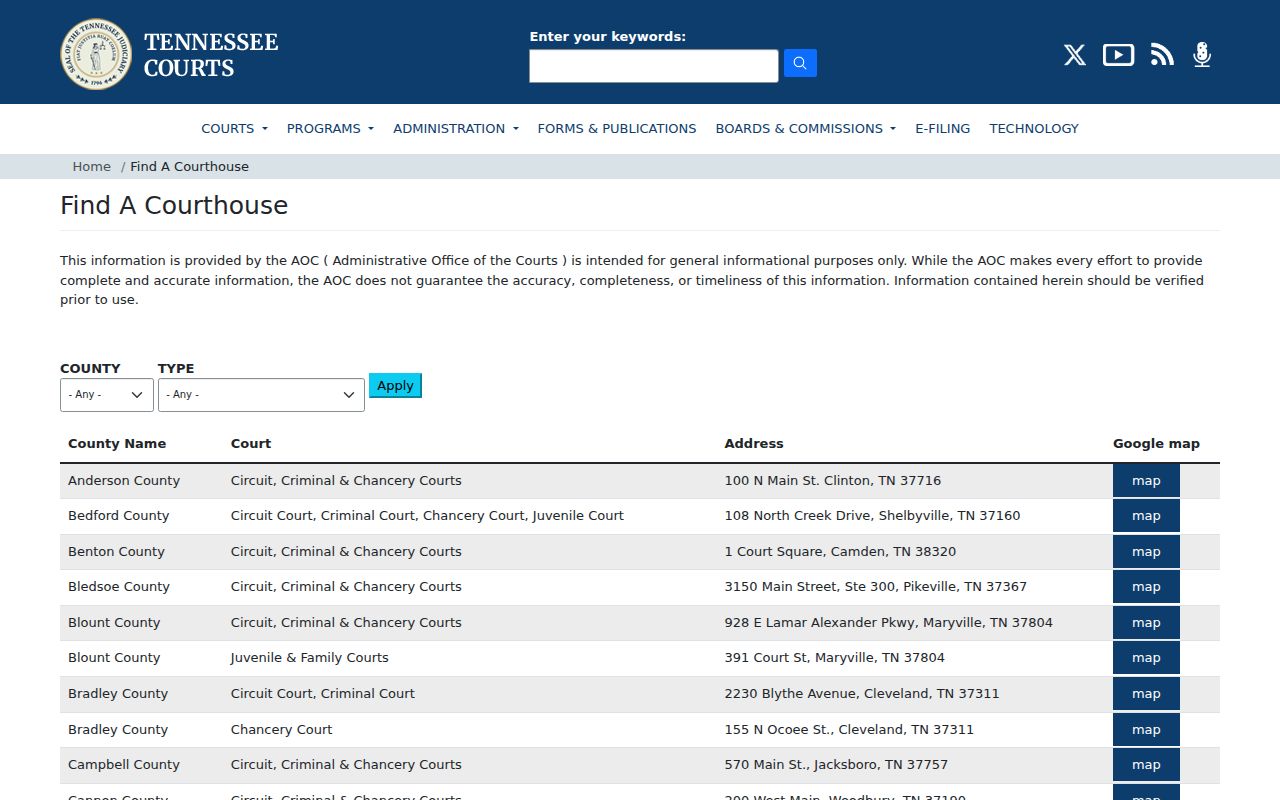
The directory gets you to the right courthouse before you ask that office to verify a setting.
How to Read a Court Setting
A complete Lake County setting ties the date to a court and a case. Read every field together, because a date alone never means trial.
| Date | The scheduled day in the newest notice or docket entry. |
|---|---|
| Time | The ordered time; local sessions commonly begin at 9:00 a.m., but a case may differ. |
| Courtroom | The room or location supplied by the clerk, secretary, or notice. |
| Judge | The presiding judge. District judges may interchange under Local Rule 17. |
| Setting Type | Arraignment, appearance, motion, status, pretrial, final hearing, or trial. |
To see what stands behind the date, the Lake County case lookup walks through finding the docket. It also points you to the correct clerk.
Lake County Court Setting Terms
The local rules use precise words for each stage of a case. Those terms tell you what is planned and whether another event may follow.
- Motion hearing
- A date secured through the judge’s secretary for a request awaiting a ruling.
- Status conference
- A scheduling event that may address parties, motions, discovery, pretrial issues, or mediation.
- Appearance date
- The criminal date after arraignment when the court may accept a plea, set trial, reset, or dismiss.
- Continuance
- A court-approved postponement, not a private agreement.
- Dormant-list notice
- A warning that an older civil case lacks a trial date or scheduling order.
"Docket call" is not a catchall term. Civil docket calls are abolished under Rule 6.04, so a Lake County civil trial is set by agreement through the secretary, by motion, or by court notice.
Continuances, Resets, and Cancellations
Local rules disfavor continuances. Once a case is set, the parties cannot continue it just by agreeing among themselves. The court generally must grant a written motion with affidavit. An oral motion in open court may also serve. Emergencies are the exception. Subpoena rules apply to an absent material witness. A witness inside the county needs at least seven days of notice. One outside it needs fourteen.
Read the newest order or entry. After a requested change, look for words like reset, continued, passed, dismissed, or disposed. Confirm with the clerk, and for Circuit or Chancery scheduling, with the court secretary. Do not assume cancellation just because a date is missing online; Lake County has no public daily settings viewer.
Civil scheduling adds steps. Counsel seeking a motion date must first confer. Talk with opposing counsel and the court secretary to find a mutually agreeable time. If no agreement is reached, moving counsel gives formal notice of a date secured from the secretary. A trial may be set by agreement with a date from the secretary, by motion, or by court notice. A Motion to Set must itself state the time and place of its hearing.
Status conferences may come within 120 days of filing. They sort out parties, amended claims, motions, discovery, pretrial issues, and alternative dispute resolution. Eligible civil actions must be scheduled for mediation, or have a waiver motion filed, before trial or final hearing. A case pending more than 18 months without a trial setting or scheduling order can reach the dormant list after notice. Dismissal without prejudice may follow if nothing is done. Each of these events is distinct from a final trial date.
Lake County Criminal Arraignment Timing
Lake County has a real local rule on arraignment timing. An indictment is arraigned the next Monday at 1:00 p.m. That is the district criminal rule. If that Monday fails, arraignment happens as soon as possible afterward. Don't do the math on your own and stop there. Holidays, court orders, or a judge's direction can push the date. Confirm with the file.
The later appearance can go several ways. The court has options. It may accept a plea agreement, set a trial date, reset the case for a definite day, or dismiss it. Whatever happens, the current docket should carry an entry showing the result. Check the specific arraignment. Confirm any later setting with the Circuit Court Clerk or your counsel.
General Sessions criminal cases work differently. That court hears misdemeanor trials and felony preliminary hearings. An indicted felony moves to Circuit Court. Before you apply the Circuit arraignment rule, read the heading on the charging paper. A General Sessions complaint and a Circuit indictment can carry the same CR-style number. The letters alone won't settle that question. The named court and the current docket entry answer it.
Lake County Public Calendar Access
One detail matters here. Lake County provides a single public access computer for Circuit Court records. It sits in the courthouse, not online. Before you drive over, call and ask three things: whether the terminal covers the court you need, whether it holds just index entries or scanned documents too, and whether copies can be printed. The official Lake County FAQ spells out this access channel directly.
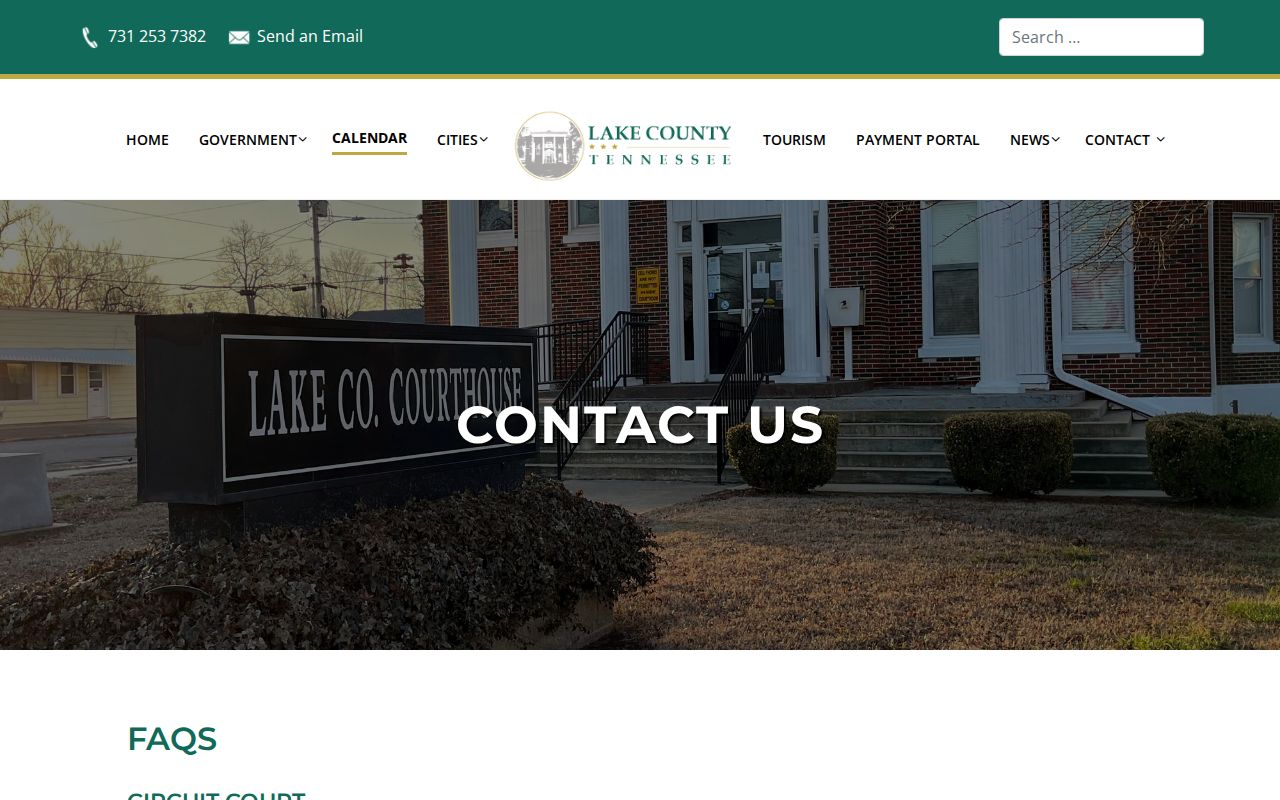
With no public trial-calendar form online, the terminal is the in-person fallback at the courthouse. Clerk staff can pull up the record and explain the current copy process. They cannot give legal advice.
Chancery users should call the Clerk & Master. Do not assume the Circuit terminal covers a Chancery setting. Juvenile and municipal records likewise sit with their own clerks under their own access rules. The terminal may show no date. Then ask to inspect the docket or the filed setting notice at the right counter. A mailed request can get you a copy. But a phone call is quicker. The pressing question is usually when and where to appear.
If You Miss a Court Setting
Miss a Lake County court date? Act fast. Call the clerk for the named court the same day. Reach out to your attorney too. Ask what the docket now shows, whether the judge entered an order, and whether a new setting has been set. The clerk can report the entries but cannot promise how the court will respond.
Act promptly. A missed criminal or traffic setting can have legal consequences; verify the docket and obtain advice about the right next step.
Do not appear on another date based only on the special-session schedule or next-Monday rule.
For a municipal citation, contact the city clerk printed on the citation.
A missed civil date can also trigger an order or other case action. Get the newest entry. Find out whether the matter was reset, dismissed, or decided, then follow whatever process the court states.